Choosing the wrong platform can cost your business months of rebuilding and thousands in migration fees. If you’re evaluating options for launching or scaling an online store, understanding what a SaaS based ecommerce platform actually offers — and where it falls short — will save you from a costly mistake.
This guide breaks down how SaaS ecommerce works, what benefits it delivers, which platforms lead the market, and how to decide if it’s the right model for your business.
Summary
- SaaS ecommerce platforms host everything in the cloud — no server management required.
- Key benefits include lower upfront costs, automatic updates, and built-in scalability.
- Shopify, BigCommerce, and Salesforce Commerce Cloud are among the top SaaS ecommerce platforms.
- SaaS is a strong fit for SMBs and growing brands; enterprise businesses may need more customization.
- Choosing the right platform depends on your business size, technical capacity, and growth plans.
What Is a SaaS Based Ecommerce Platform?
A SaaS based ecommerce platform (Software as a Service) is a cloud-hosted solution where the vendor manages the infrastructure, software updates, and security — and merchants pay a recurring subscription to use it.
Unlike on-premise platforms where you install and maintain software on your own servers, SaaS ecommerce runs entirely in the cloud. You access it through a browser, and the vendor handles the technical heavy lifting in the background.
How SaaS Ecommerce Works
The SaaS model follows a straightforward structure: the vendor hosts the platform on shared or dedicated cloud servers, and merchants configure their storefronts through an admin dashboard. There’s no code to deploy, no server to patch, and no hosting bill to manage separately.
This makes SaaS ecommerce particularly attractive for businesses that want to move fast without a large technical team.
SaaS vs. Open-Source vs. Headless Ecommerce
| Feature | SaaS Ecommerce | Open-Source (e.g., Magento) | Headless Commerce |
| Hosting | Vendor-managed | Self-hosted | Vendor or self-hosted |
| Setup complexity | Low | High | High |
| Monthly cost | Subscription-based | Hosting + dev costs | Varies |
| Customization | Moderate | High | Very high |
| Best for | SMBs to mid-market | Tech-heavy enterprises | Custom frontend needs |
Is Shopify a SaaS Company?
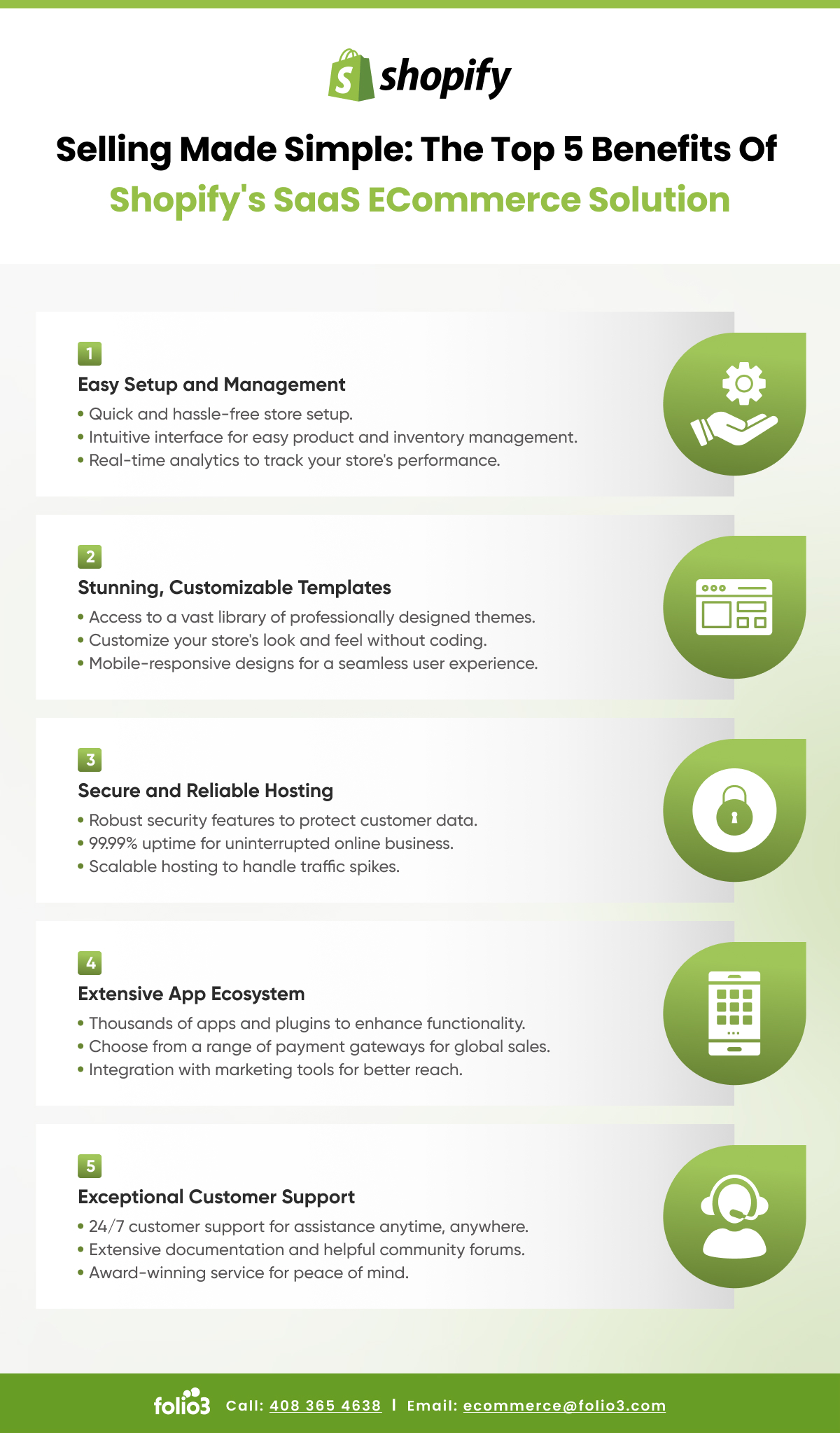
Yes — Shopify is a SaaS company. It delivers its ecommerce software over the internet via a subscription model, manages all infrastructure, and continuously rolls out updates without requiring merchants to install anything.
Shopify powers over 1.7 million businesses across 175+ countries, making it one of the most widely used SaaS ecommerce platforms globally. Its plans range from basic storefronts to Shopify Plus, which targets high-volume and enterprise merchants.
This is a common question from buyers evaluating SaaS for ecommerce because Shopify also has a POS product, a payments solution, and a fulfillment network — it’s grown well beyond a simple software subscription, but its core delivery model remains SaaS.
Key Benefits of a SaaS Ecommerce Platform
Lower Barrier to Entry
Traditional ecommerce required significant upfront investment in servers, licensing, and developer time. SaaS ecommerce platforms flip that model — most merchants can launch a functional store in days, not months, with a monthly subscription starting as low as $29.
There’s no capital expense for infrastructure. Costs are predictable and scale with your business.
Automatic Updates and Security Patches
One of the most underappreciated benefits of SaaS for ecommerce is maintenance. The vendor continuously updates the platform — adding features, fixing bugs, and applying security patches — without any action needed on your end.
For businesses without a dedicated IT team, this is a major operational advantage.
Built-In Scalability
SaaS ecommerce platforms are built to handle traffic spikes and growing product catalogs. During peak sales periods like Black Friday or product launches, the platform scales automatically without you needing to provision additional servers.
Platforms like Shopify and BigCommerce are built on infrastructure that can handle tens of thousands of concurrent users.
Ecosystem of Integrations
Most SaaS ecommerce platforms come with an app marketplace and pre-built integrations with ERPs, CRMs, shipping carriers, payment gateways, and marketing tools. This ecosystem significantly reduces custom development time.
| Integration Category | Common Tools |
| ERP | NetSuite, SAP, Microsoft Dynamics |
| CRM | Salesforce, HubSpot |
| Marketing | Klaviyo, Mailchimp, Google Ads |
| Shipping | ShipStation, EasyPost, FedEx |
| Payments | Stripe, PayPal, Affirm |
24/7 Support and Uptime SLAs
SaaS vendors typically offer round-the-clock customer support and commit to uptime guarantees (usually 99.9%+). This level of reliability is difficult and expensive to replicate on self-hosted infrastructure, especially for smaller teams.
Top SaaS Ecommerce Platforms Compared
The SaaS ecommerce landscape has matured significantly. Here’s how the leading platforms stack up:
| Platform | Best For | Starting Price | Standout Feature |
| Shopify | SMBs to mid-market | $29/month | Ease of use, app ecosystem |
| Shopify Plus | High-volume brands | $2,300/month | B2B, automation, multi-store |
| BigCommerce | B2B & catalog-heavy | $29/month | Native B2B features |
| Salesforce Commerce Cloud | Enterprise | Custom | AI personalization, CRM integration |
| Wix eCommerce | Micro-businesses | $17/month | Design flexibility |
Now that we’ve covered the platform landscape, let’s look at what you should consider before committing to one.
How to Choose the Right SaaS Ecommerce Platform
Assess Your Business Size and Stage
A solo founder launching a DTC brand has fundamentally different needs than a mid-market manufacturer moving B2B sales online. Platforms like Shopify work well for early-stage businesses. Shopify Plus or Salesforce Commerce Cloud make more sense at scale.
If you’re doing under $1M in annual revenue, prioritize ease of use and cost. Above $5M, prioritize flexibility, integrations, and B2B capabilities.
Evaluate Customization Limits
This is where SaaS ecommerce platforms can fall short. Most SaaS platforms restrict deep backend customization — you work within the framework the vendor provides. If your business model requires complex pricing logic, custom checkout flows, or unique inventory management, you may hit walls faster than expected.
Before committing, test the platform’s customization options against your actual business requirements — not just the demo use cases.
Check Total Cost of Ownership
The subscription price is just one part of the total cost. Factor in:
- Transaction fees (especially on non-native payment gateways)
- App and plugin subscriptions
- Theme costs
- Development fees for custom work
- Migration costs from your existing platform
A $29/month plan can quickly become $300–500/month once you add the tools your store actually needs.
Confirm Integration Compatibility
If you’re running an ERP, a CRM, or a fulfillment system, verify that native or third-party integrations exist before you sign a contract. Poor integration coverage is one of the top reasons businesses end up migrating platforms within two years.
For businesses running on Shopify, Shopify Oracle ERP integration is a common path for syncing order data, inventory, and financials without manual intervention.
Common Mistakes When Adopting SaaS Ecommerce
Many businesses jump into a SaaS ecommerce platform without fully pressure-testing it. Here are the mistakes that most often lead to re-platforming:
- Choosing on price alone. The cheapest plan often lacks the features needed for growth. Budget for where you’ll be in 18 months, not where you are today.
- Ignoring migration complexity. Moving product data, customer history, and SEO equity from one platform to another is time-consuming. Underestimating this cost leads to launch delays and traffic loss.
- Assuming everything is plug-and-play. SaaS platforms are easy to start but require real configuration work to perform well. Custom workflows, B2B pricing tiers, and multi-channel selling all require thoughtful setup.
- Overlooking B2B requirements. If you sell to both businesses and consumers, confirm that the platform supports B2B-specific features like customer-specific pricing, purchase order workflows, and account-based access. Explore Shopify Plus benefits if you’re scaling a B2B operation.
SaaS Ecommerce Platform Use Cases by Business Type
Not every business is the same fit for SaaS for ecommerce. Here’s a quick reference:
| Business Type | Recommended Platform | Why |
| DTC brand (startup) | Shopify | Fast setup, strong marketing tools |
| B2B manufacturer | BigCommerce or Shopify Plus | Native B2B, bulk pricing |
| Omnichannel retailer | Shopify Plus | POS + online unified commerce |
| Enterprise brand | Salesforce Commerce Cloud | Personalization, CRM-native |
| Content-led store | Wix or Shopify | SEO + design flexibility |
For businesses evaluating whether to move from a legacy system, understanding what Shopify Plus offers compared to standard Shopify is a good starting point before making a platform decision.
Key Takeaways
- A SaaS based ecommerce platform removes infrastructure burden and lets teams focus on selling, not server management.
- Shopify is a SaaS company — and a market leader — but it’s one of several strong SaaS ecommerce platforms to evaluate.
- Total cost of ownership, customization limits, and integration compatibility are the three factors that most often surprise buyers after launch.
- SaaS ecommerce is best for businesses that want speed, simplicity, and scalability without heavy technical overhead.
- Enterprise brands with complex requirements may need to weigh SaaS against headless or open-source options before committing.
Conclusion
Picking the right ecommerce infrastructure shapes everything from launch speed to long-term operating costs. A SaaS based ecommerce platform removes the technical barriers that slow most businesses down — but it’s not a one-size-fits-all solution. Understanding the trade-offs between flexibility and convenience is the real decision you’re making.
If you’re evaluating platforms or planning a migration, talk to our team to get a clear picture of which solution fits your business model, integrations, and growth stage.
Frequently Asked Questions
What Is a SaaS Based Ecommerce Platform?
A SaaS based ecommerce platform is cloud-hosted software that lets businesses build and manage online stores via a subscription. The vendor handles hosting, updates, and security. Merchants configure their storefront through a browser-based dashboard without managing servers.
Is Shopify a SaaS Company?
Yes. Shopify delivers its software over the internet through a subscription model, manages all infrastructure, and updates the platform without requiring merchants to install anything. It is one of the most widely used SaaS ecommerce platforms globally.
What Are the Main Advantages of SaaS Ecommerce Platforms?
The main advantages are lower upfront cost, automatic updates, built-in scalability, and an ecosystem of pre-built integrations. Businesses avoid the overhead of managing servers or applying security patches manually.
What Are the Limitations of SaaS for Ecommerce?
SaaS platforms limit deep backend customization, which can be a constraint for businesses with complex workflows. Transaction fees, app costs, and vendor lock-in are also factors to evaluate before committing.
How Do I Choose Between SaaS Ecommerce Platforms?
Evaluate total cost of ownership (not just subscription price), customization flexibility, integration compatibility with your existing tools, and B2B capabilities if relevant. Test the platform against your actual workflows before signing a contract.
Can Large Enterprises Use SaaS Ecommerce Platforms?
Yes. Salesforce Commerce Cloud and Shopify Plus are purpose-built for enterprise use cases, offering advanced personalization, B2B workflows, and multi-store management. Standard SaaS plans are typically designed for SMB and mid-market merchants.