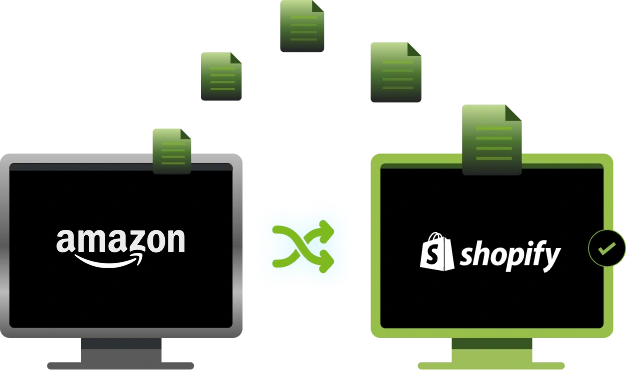
Control Amazon sales while keeping Shopify as the B2B commerce layer. Keep catalogs, allocations, and compliance documents governed across teams so account-based ordering events stay consistent from PO to shipment.
Amazon listings often need different assortment, pricing, and territory rules than your B2B catalogs. Without governance, offers diverge, creating incorrect pricing exposure and catalog exceptions for key accounts.
Marketplace demand can consume stock reserved for priority accounts or contract commitments. Basic sync shows on-hand only, ignoring allocations, backorder policies, and multi-warehouse priorities needed for B2B reliability.
For Amazon wholesale programs, EDI transactions like 850, 855, 856, and 810 must reflect real order, ship, and invoice events. Manual files create timing errors and compliance deductions.
Amazon measures ASN and label compliance at carton level, including SSCC identifiers and strict timing. When packing data differs from the ASN, receipts fail and chargebacks follow.
Explore our portfolio of Shopify solutions that’ve helped many eCommerce brands boost conversion and engagement rates.
Keep marketplace rules, compliance, and reporting consistent across teams.
Ship a Shopify Amazon integration with documented contracts, test coverage, and observability from day one. You get monitored jobs, retry rules, and trace IDs across orders, inventory, and shipments, so teams can diagnose issues without guesswork during peak volume cutovers.
Maintain separate Amazon assortments and pricing while protecting B2B contract catalogs in Shopify. Catalog assignments stay tied to company locations, and Amazon offers inherit only approved SKUs and price rules, reducing accidental exposure across territories and buyer types and channels.
Keep marketplace availability based on what is actually available to sell after commitments for key accounts and internal holds. The integration calculates channel quantities by warehouse and ship date, then updates Amazon and Shopify without distorting planning or fulfillment promises.
Connect shipment packing data to Amazon confirmations so each carton identifier and carrier reference matches what Amazon expects. For Vendor Central programs, generate required EDI messages and keep links to Shopify orders, invoices, and credits for clean dispute evidence always.
We start by assigning authority for product, pricing, and inventory, then keep Shopify focused on buying workflows. Amazon receives only approved offers, while ERP or WMS remains the record for quantities, costs, and shipments status.
Orders, acknowledgements, and shipment events move on defined triggers such as order acceptance, pick completion, and invoice posting. We support SP-API for seller workflows and EDI messaging when Amazon requires standard documents for wholesale programs.
When Amazon or Shopify data conflicts with the source record, we apply precedence rules and log decisions. Exceptions route to a queue, and contract catalog changes require approvals so marketplace offers never overwrite negotiated terms.
Product identifiers, titles, and offer attributes can flow from Shopify to Amazon, while Amazon listing status and errors return to Shopify for review. Updates use feeds and marketplace rules daily.
Amazon order data enters the integration, then Shopify reflects channel orders for service and reporting. Shipment confirmations and cancellations flow back to Amazon from fulfillment systems to keep status accurate.
Compliance Documents Boundary
Discovery
Mapping
Workflow Design
B2B Testing
Cutover
Stabilization

We have been working with Folio3 since 2018. We are extremely fortunate to have found such a fantastic team of people. They are professional, organized, time-sensitive, and their work is stellar. Most recently, we needed support with dynamic schema mark-up and GA4 event integrations.
![]()

As you know our project is quite complicated & involves some fairly intricate customizations. Overall we are very happy with the progress so far. We feel that your team understands our requirements very well & also anticipates issues & provides effective solutions.
![]()

The Folio3 team is a pleasure to work with. During the project, they were responsive and their turnaround time was always stellar.
![]()
Shopify supports selling through sales channels, which is how many teams connect external marketplaces into commerce operations. Amazon provides the Selling Partner API to access data for orders, shipments, payments, and more across seller and vendor contexts. For B2B, basic connectors break when you need governed catalogs, committed inventory rules, and Vendor Central EDI documents tied to warehouse events, not simple order imports.
B2B sellers use Amazon for procurement reach, not just consumer demand. The integration must protect contract pricing in Shopify B2B catalogs while publishing marketplace-specific offers. It also has to control inventory commitments, keep order status truthful, and support Vendor Central EDI where Amazon requires it. That combination turns Amazon into a governed channel, not a parallel store for buyer teams.
Shopify B2B catalogs let you assign products and prices to company locations, so different customers see different terms. In an Amazon program, offers still follow marketplace rules by region and buyer type. A proper integration maps those rules without exposing contract-only assortments and keeps logs when listings change in Amazon.
Marketplace availability must reflect what you can ship, not just what a warehouse reports. For B2B, stock is often committed to key accounts, project orders, or internal holds. The integration calculates channel availability and updates Amazon, while Shopify stays accurate for account-level ordering and prevents overselling during promotions and delays.
When Amazon buys wholesale, it expects standard EDI documents tied to real shipment and billing events. Amazon’s Vendor Central EDI guide lists core transactions such as 850, 855, 856, and 810. The integration generates them from warehouse and finance records and links them to Shopify orders for traceability during disputes.
Shopify holds the customer context for B2B catalogs, while Amazon needs marketplace listings and offers. The integration selects eligible SKUs, builds offer payloads, and submits them through Amazon’s Selling Partner API feed mechanisms. Amazon returns processing results and errors, which are stored for review and rework by channel merchandising teams.
Amazon order data enters the integration as marketplace orders or procurement POs, depending on program. Shopify records the channel order for service visibility, while the back office drives fulfillment. Shipment confirmations, cancellations, and tracking updates flow back to Amazon so buyers see accurate status and delivery expectations across fulfillment nodes.
Ownership rules prevent Amazon edits from overwriting governed data in Shopify or the system of record. When identifiers mismatch, inventory goes negative, or an EDI message fails validation, the integration quarantines the event, keeps both systems unchanged, and routes it to the right team with full context for resolution tracking.
Program differences drive architecture. Seller workflows rely on SP-API data access, while Vendor Central requires EDI documents and compliance timing tied to shipment departure.
Carton-level truth does not live in Shopify. Amazon receipt models depend on carton identifiers like SSCC and the ASN structure; those details come from packing and labeling systems, not Shopify order headers.
Access control is not optional. SP-API uses roles to limit access to sensitive data; the integration must scope permissions and logs to match least-privilege requirements.
Catalog and pricing exposure requires strict rules. Shopify catalogs can be assigned to company locations; Amazon offers must be filtered so contract-only assortments do not publish publicly.
Compliance timing creates operational pressure. Amazon ASN requirements include tight submission windows and data field expectations, so warehouse events and carrier references must be captured accurately at the source.

Shopify B2B uses catalogs tied to company locations for pricing and product access. The integration publishes only the Amazon offers that match your channel rules, while keeping contract catalogs reserved for account-based buying in Shopify.
For Vendor Central, Amazon EDI commonly includes invoice documents (810) and shipment notices (856) alongside purchase orders. The integration links those documents to the originating Shopify order context for traceability and support workflows.
Shopify companies can include multiple locations, and catalogs can be assigned at the location level. The integration uses that structure to determine which assortments and pricing should remain B2B-only versus what can publish to Amazon by territory rules.
Shopify acts as the commerce layer for B2B buying and customer context. Inventory quantities, shipment details, and carton-level data usually remain owned by ERP or WMS, while Amazon receives status updates from those systems through the integration.
SP-API roles control which operations and sensitive data an integration can access. Use least-privilege scopes, segregate environments, and log every data change that affects listings, orders, and financial documents.
Send in your details to get instant access to our calendar and book a convenient slot.
Please ensure to send sufficient details about your project so our experts can provide you the most value in the free consultation.
3080 Yonge Street, Suite 6060, Toronto, Ontario M4N 3N1
Amado Nervo #2200, Edificio Esfera 1 piso 4, Col. Jardines del Sol, CP. 45050, Zapopan, Jalisco, Mexico
C/- Prime Partners Level 4 1 James Place, NORTH SYDNEY New South Wales 2060
160 Bovet Road, Suite # 101, San Mateo,
CA 94402 USA
6701 Koll Center Parkway, #250 Pleasanton, CA 94566
Tel: +1 (408) 412-3813
Export House, Cawsey Way, Woking, Surrey, GU21 6QX
Tel: +44 (0) 14 8339 7625
Folio3 FZ LLC, UAE, Dubai Internet City,
1st Floor, Building Number 14, Premises 105, Dubai, UAE
Tel: +971 04 2505173
49 Bacho Kiro Street, Sofia 1000, Bulgaria
Folio3 Pvt. Ltd, Folio3 Tower, Plot 26, Block B,
SMCH Society, Main Shahrah-e-Faisal, Karachi.
Tel: +92-21-3432 3721-4
First Floor, Blue Mall 8-R, MM Alam Road Gulberg III, Lahore
Corporate 7 by Maaksons, Executive Block, Civic Center 1, Gulberg Green, Islamabad
Tel: 0333 5657425
Set up your Shopify MCP with Folio3.