


Fashion ecommerce agency
A Digital Storefront That Keeps Pace With Your Collections
Fashion moves quickly, and your online store should match that speed. We build platforms that support rapid drops, accurate inventory, richer product stories, and smooth cross-channel operations - all shaped for apparel workflows, visual content, and multi-season selling.
Fashion Ecommerce Challenges We Help You Solve
Seasonal Catalog Bottlenecks
Challenge
Frequent product launches, colorways, and size grids create heavy catalog updates. Without strong data workflows, teams deal with delayed listings, lost SEO value, and inconsistent product pages.
Solution
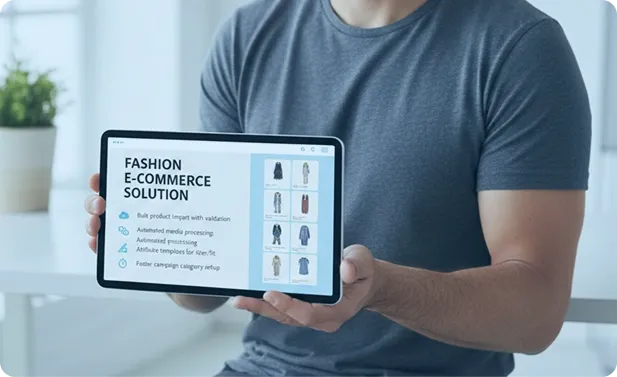
- Bulk product import with validation
- Automated media processing
- Attribute templates for size/fit
- Faster campaign category setup
Cross-Channel Stock Gaps
Challenge
Store stock, warehouse stock, and marketplace feeds often drift out of sync, causing oversells or late deliveries, especially during sales peaks.
Solution
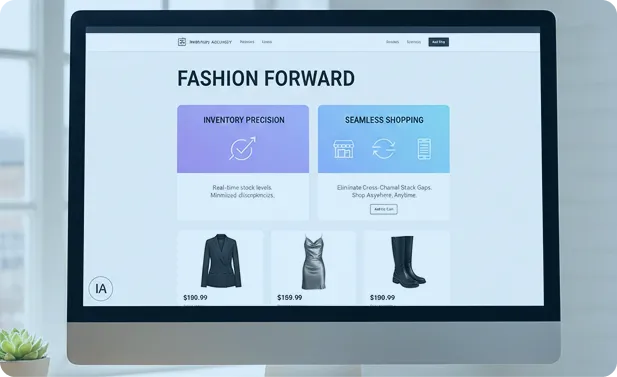
- Real-time stock sync
- Warehouse + store availability rules
- Backorder/notify logic by item
- Unified inventory dashboard
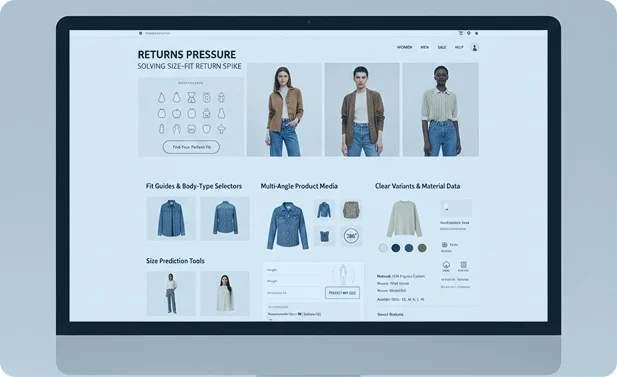
Size-Fit Return Spike
Challenge
Apparel sees some of the highest return rates online. Weak product details, unclear sizing, and poor visualization reduce buyer confidence.
Solution
- Fit guides and body-type selectors
- Multi-angle product media
- Size prediction tools
- Clear variants and material data
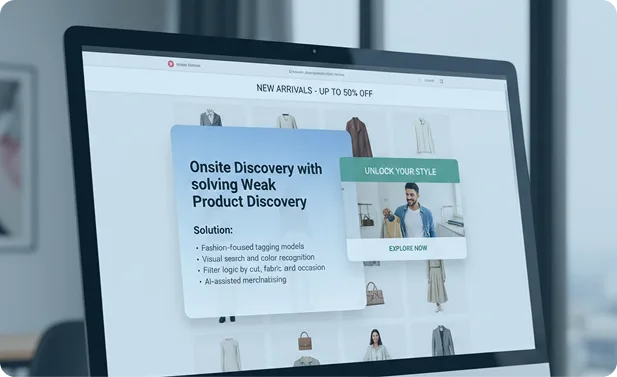
Weak Product Discovery
Challenge
Generic search engines struggle with fashion-specific attributes like silhouette, softness, stretch, or wash, causing lower conversion and higher bounce.
Solution
- Fashion-focused tagging models
- Visual search and color recognition
- Filter logic by cut, fabric, and occasion
- AI-assisted merchandising
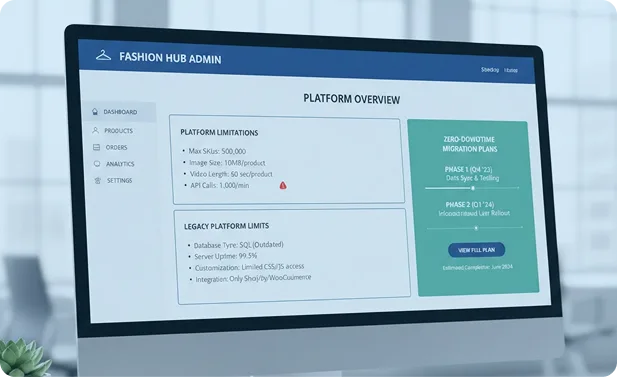
Legacy Platform Limits
Challenge
Legacy platforms slow down new launches and campaign workflows. Migrations from older stacks often break URLs, media, or customer data.
Solution
- Zero-downtime migration plans
- URL and SEO preservation
- Clean data mapping for variants
- Scalable architecture for expansion
Our Portfolio of Successful Fashion eCommerce Solutions
Explore how our Fashion eCommerce solutions have driven innovation, profitability, and growth for global brands.
- Cosmetics & Skincare
- Shopify
Shopify Promo Code and Custom Bundle Feature Development
- Hair Extensions & Beauty
- Shopify Plus + NetSuite
Unifying B2B and B2C Commerce on Shopify Plus for Easilocks
- Footwear & Fashion
- BigCommerce Headless + WordPress + NetSuite
Headless Commerce Integration for Better CX & Inventory Management
Build an E-commerce Store That Fits Your Brand’s Vibe
Bring Your Fashion Brand Into a High-Impact Digital Experience
Fashion-savvy buyers shop visually, compare looks, and expect clean navigation across apparel, footwear, accessories, and lifestyle products. We tailor each store with layouts, merchandising tools, and technology built around how fashion is browsed and bought.

Visual-First Design
Create layouts that highlight lookbooks, drops, and accessories with clean visuals, fast loading, and clear navigation that help shoppers explore collections, try styles virtually, and decide faster with fewer clicks.

Advanced Search & Filters
Help buyers find exact pieces through tagging built for fashion attributes like fit, fabric, cut, color, and style, paired with AI-powered comparisons that make options clearer and reduce size-related returns.

Collection Launch Tools
Let teams prepare new lines with bulk scheduling, preview modes, and automated grouping so seasonal, capsule, and limited-release collections go live on time without manual category work or content bottlenecks.

Virtual Try-On Tools
Give shoppers a clearer sense of fit with virtual try-on prompts, styling cues, and detailed product notes that improve confidence, reduce hesitations, and keep page performance steady across devices.

AI Merchandising
Surface trending items, restocks, personalized outfits, and smart comparison suggestions by reading browsing behavior and inventory movement, giving fashion brands sharper ways to guide shoppers through changing catalogs.

Omnichannel Support
Sync store and warehouse stock for pickup, ship-from-store, and split deliveries with controls that prevent overselling. These workflows match what a fashion website design company builds for busy seasons.

Fast Checkout
Guide buyers through a clean, mobile-first checkout that supports local payments, digital wallets, and saved profiles, reducing drop-offs during quick purchases, drops, or limited-time releases.

Global-Ready Setup
Set up multi-region storefronts with local currency, taxes, and languages while keeping product data consistent. This structure fits how a fashion website design agency supports international brands.
Our Story in Numbers
We support fashion brands across apparel, footwear, accessories, and lifestyle segments by building online stores that handle high SKU turnover and frequent collection updates. As a fashion ecommerce partner, we focus on catalog stability, fast page setups, and reliable cross-channel integrations that keep merchandising teams working smoothly.
Fashion businesses also need specialists who understand category details. As a fashion web design agency and fashion ecommerce agency, we shape layouts, product stories, and data workflows in a way that fits how shoppers browse and buy, giving brands a setup that works without constant rework.
Experts
with ERPs
Fashion Ecommerce Development for Every Business Model
Different apparel segments operate with different merchandising rhythms, inventory rules, and buyer expectations. We adapt builds to match each model’s pace and operational structure.

D2C Fashion Labels
Support rapid drops, influencer campaigns, and strong brand storytelling with a flexible storefront.
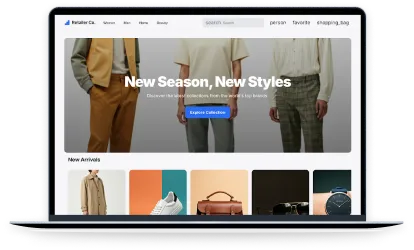
Multi-brand Retailers
Handle diverse catalogs, complex filters, and marketplace-like navigation across categories.
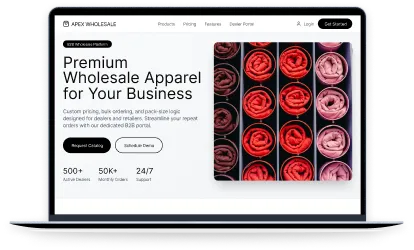
Wholesale Apparel & B2B
Provide custom pricing, bulk ordering, pack-size logic, and dealer portals built for repeat orders.
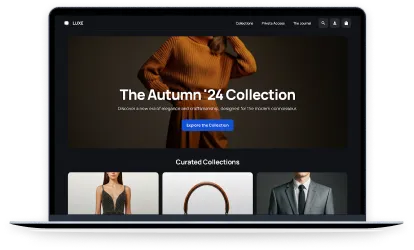
Luxury & Premium Fashion
Showcase craftsmanship with controlled release flows, private collections, and curated visual layouts.
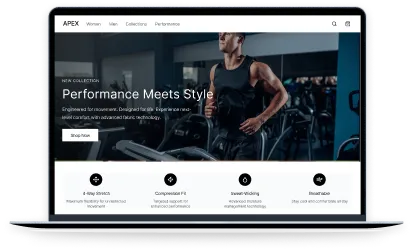
Athleisure & Performance Wear
Highlight functional attributes like stretch, compression, sweat resistance, and fit using smart tagging.
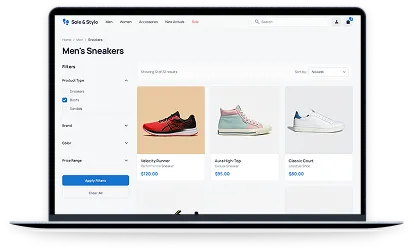
Footwear & Accessories
Manage varied size charts, colorways, and high-SKU accessories with clean catalog workflows.

Technology That Keeps Fashion Ecommerce Websites Running Smoothly
We integrate ecommerce, warehouse, and retail systems to help brands manage fast-changing catalogs, stock transfers, and multi-store fulfillment. Our experience in fashion ecommerce tech ensures stable workflows during launches, drops, and peak seasons.
Ready to Grow Your Fashion Brand With a High-Performing Digital Store?
AI-First Ecommerce Development for Smarter Fashion Growth
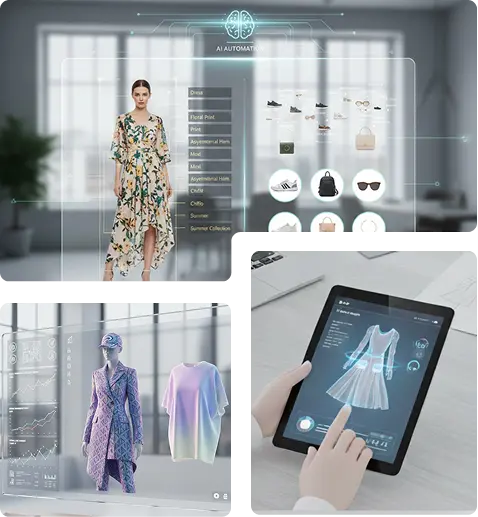
AI reshapes how fashion brands manage catalogs, personalize shopping, and predict demand. We configure tools that tag products automatically, recommend outfits, flag low-stock items before sales peaks, and detect sizing-based return patterns. Each store can run dynamic merchandising, automated product grouping, and forecasting tuned to seasonality and shopper behavior.
- Automated product tagging
- Outfit recommendation logic
- Trend prediction models
- Return pattern detection
- Visual search tools
- Stock forecasting
Smart E-commerce Website Services for Modern Fashion Brands
We design, build, migrate, and optimize apparel storefronts with workflows built for high SKU volumes and seasonal updates.
Fashion Web Design
Layouts built for lookbooks, high-resolution media, and collection-focused browsing that guide shoppers naturally from category to checkout. As a fashion web design agency, we shape each page around how buyers explore trends and compare styles.
Fashion Ecommerce Development
Custom storefronts with variant grids, size logic, shipping rules, and advanced merchandising aligned with apparel operations. Our team handles the details behind fashion ecommerce website development so products publish cleanly and updates don’t slow you down.
System Integrations
Connect ERP, WMS, POS, and marketplaces for unified stock, shared order data, and consistent pricing. These setups give brands the workflow stability expected from a seasoned fashion website design company.
Migration Support
Safe migration from Magento, WooCommerce, or custom CMS setups with URL retention and clean product/variant mapping. We move data with the care you’d expect from a fashion website design agency, keeping catalogs intact and teams productive.
Performance & Speed Optimization
Compress fashion-heavy media, optimize code, and reduce load times without compromising visual quality. These improvements help your store match the standards buyers expect from modern fashion ecommerce store development.
Analytics & Conversion Insights
Track collection performance, sell-through, stock aging, UPT, and return triggers to improve decisions. We organize dashboards so teams using a fashion ecommerce agency setup can act quickly and avoid guesswork.
Book a Discovery Call With Our Fashion Ecommerce Specialists
Explore, Learn, And Grow With Our Insightful Content
Start your journey of discovery where each article promotes growth and unlocks your true potential.

Shopify ChatGPT Integration: How to Use AI to Automate and Grow
If you’ve been following ecommerce trends, you’ve probably noticed something significant: AI-powered shopping is no longer hypothetical...
Read More
How BigCommerce MCP Enables Real-Time AI Automation for...
The next wave of eCommerce isn’t about having AI—it’s about having AI that actually understands your business. While 80% of retailers already use...
Read More
WordPress vs Wix vs Squarespace: Which Platform Fits Your Business
Your platform choice between WordPress vs Wix vs Squarespace isn’t just about building a website, it’s about choosing the infrastructure
Read More
Frequent Ask Questions?
What does a fashion ecommerce project typically include?
A full build covers catalog structure, variant logic, media handling, checkout setup, and key integrations. These elements form the base of reliable fashion ecommerce website development for brands with fast-moving collections.
How do you keep large fashion catalogs organized?
We use structured templates for sizing, colors, materials, and seasonal tags so teams publish new items without cleanup issues. This approach reflects the workflow planning expected from a seasoned fashion website design company.
Can you support migrations from older platforms?
Yes. We move products, URLs, customers, and orders with mapped redirects to avoid data or SEO loss. As a fashion website design agency, we handle migrations carefully to preserve catalog accuracy and store performance.
How do you reduce return rates for apparel stores?
Fit guides, clearer product details, size prediction tools, and improved tagging help buyers choose accurately. These enhancements often come as part of fashion ecommerce store development for brands dealing with high return volumes.
Do you connect stores with marketplaces and retail stores?
Yes, through ERP, WMS, and POS integrations that manage stock, pricing, and order routing across channels. This level of integration is a core capability for a modern fashion ecommerce agency.
How does AI support fashion ecommerce?
AI automates tagging, improves search, recommends outfits, predicts stock needs, and identifies return patterns. These tools strengthen fashion ecommerce operations by reducing manual work and improving product discovery.
What affects project timelines?
Catalog size, number of variants, integrations, custom UX elements, and migration complexity shape delivery time. A fashion web design agency will map these details early to avoid delays and keep teams aligned.
Can you build for both B2B and consumer-facing buyers?
Yes. We support bulk ordering, restricted catalogs, custom pricing, and retail-friendly browsing within the same storefront, the kind of dual setup common in fashion ecommerce agency projects.
Book a Call With Our Fashion Ecommerce Experts
Share your project goals, and we’ll outline a clear plan for building or upgrading your apparel storefront. Expect practical recommendations based on catalog size, operational workflows, and growth targets.
- Review your current ecommerce setup
- Identify catalog and inventory gaps
- Recommend platform and integration options
- Provide a project plan with timelines