Many businesses look to use Shopify to launch their ecommerce store. This blog covers hiring an expert to build a Shopify store and the benefits they bring.
You’re staring at Shopify’s dashboard, wondering if you should tackle this yourself or bring in professional help.
Here’s the reality: 73% of business owners who attempt DIY e-commerce store builds end up hiring experts within six months anyway, after wasting precious time and resources.
The decision to hire someone to build a Shopify store isn’t just about technical capability; it’s about opportunity cost and speed to market.
When you choose to hire someone to build your Shopify store, you’re investing in expertise that can mean the difference between a store that converts at 1.2% versus one that hits industry benchmarks of 3-4%.
Prior to discussing about how to hire someone to build Shopify store, it’s critical to realize that Shopify is the greatest option accessible to eCommerce businesses. Shopify offers something for everyone, regardless of the size of their online store!
A sizable international community of online merchants who make the most of Shopify’s capabilities support this eCommerce platform. Joining this active club is not simple, though, especially if you have no prior website-building expertise. At that point, you make the decision to hire someone to build Shopify store!
It is wise not to settle for less when it comes to your eCommerce website. Therefore, to ensure you will have a successful and visually appealing eCommerce platform, you need to know how to find and hire Shopify experts, like Folio3, to set up your storefront.
What You’ll Learn in This Guide
This comprehensive guide covers everything you need to successfully hire Shopify professionals:
- Decision framework – When professional development makes financial sense vs DIY approaches
- Expert categories – Understanding freelancers, agencies, and specialists to match your project needs
- Budget planning – Real cost breakdowns from $2,000 basic setups to $150,000+ enterprise builds
- Sourcing strategies – Where to find qualified professionals beyond obvious marketplaces
- Evaluation criteria – Technical and business questions that reveal actual expertise levels
- Project management – Milestone frameworks and communication protocols for smooth execution
- Risk mitigation – Red flags, contract considerations, and quality assurance processes
Hire Someone To Build Shopify Store: An Overview
We will cover a wide range of topics, including the price of hiring Shopify experts and how much it costs to construct a store from the ground up. We will also discuss how long it will take to finish your Shopify website and the factors you should think about before hiring someone to build your website.
Building a Shopify store is a simple procedure that requires little effort. However, little research is needed when hiring someone to create a Shopify store. Let’s look at the most important reasons for hiring an expert.
Reasons to Hire An Expert to Build a Shopify Store
1. Save Time
You can save time from learning about Shopify website setup if you hire a professional. In this case, the Shopify development expert would free you from this burden and let you focus on other critical areas of your business: product and market research and marketing.
Remember that every professional has a different time frame for getting your online store up and running. Make sure to choose your Shopify developer based on your specific requirements.
2. Best Quality Work
While building an online store on Shopify on your own can give you the confidence to learn a new skill, it does not guarantee the best quality work.
Only a professional with a portfolio of previous work and having set up multiple Shopify stores can provide the highest quality. You can always check reviews from previous clients to see how good they are at their job.
3. Technical Complexity Beyond Templates
While Shopify’s templates look straightforward, customization requires liquid coding knowledge, CSS expertise, and understanding of conversion optimization principles.
Professional developers bring experience with:
- Advanced app integrations and custom functionality
- Mobile optimization that goes beyond responsive design
- Page speed optimization (critical for SEO and conversions)
- Proper schema markup and technical SEO implementation
- Security configurations and compliance requirements
4. Conversion Rate Optimization Expertise
The most significant advantage of hiring Shopify experts isn’t just aesthetic—it’s strategic.
Professionals understand user experience psychology, checkout flow optimization, and industry-specific best practices that can increase conversion rates by 40-80%.
They know which apps work well together, how to structure product pages for maximum impact, and how to configure analytics for meaningful insights.
5. Technical Advantages of Professional Development
Shopify developers handle complex technical aspects like API integrations, webhooks, and custom app development, allowing you to focus on business growth. Their ability to work with PHP, React, and GraphQL ensures seamless connections with third-party tools like social media platforms and WordPress integrations.
Professional developers bring expertise in:
- Advanced customization beyond template limitations
- Cross-platform compatibility and responsive design optimization
- Technical SEO implementation specific to Shopify’s architecture
- Performance optimization that impacts both user experience and search rankings
- Security best practices and compliance requirements
6. Save Money
You might be thinking, “Why should I hire someone too expensive? It’s just one Shopify store!” But if you consider it a bit longer, you’ll see that hiring a developer is a long-term investment.
First of all, they build an optimized store that attracts your intended customers and increases sales. This helps generate revenue that eventually compensates for the initial investment.
Do you hire someone to build your Shopify store or make it yourself?
byu/haynetime indropshipping
How Much Does It Cost To Build A Shopify Website
Several factors determine the cost of building a Shopify store. The most important ones are:
Shopify Plans and Pricing
Shopify is a low-risk opportunity to create an online shop. Opening an account on Shopify is completely free, and one can exercise an opportunity trial period to review if the platform is what you have been looking for.
You can access all of Shopify’s useful features during the trial period. You can use that time to determine the necessary tools to make your site functional. However, if you ever want to leave, you can simply delete your account.
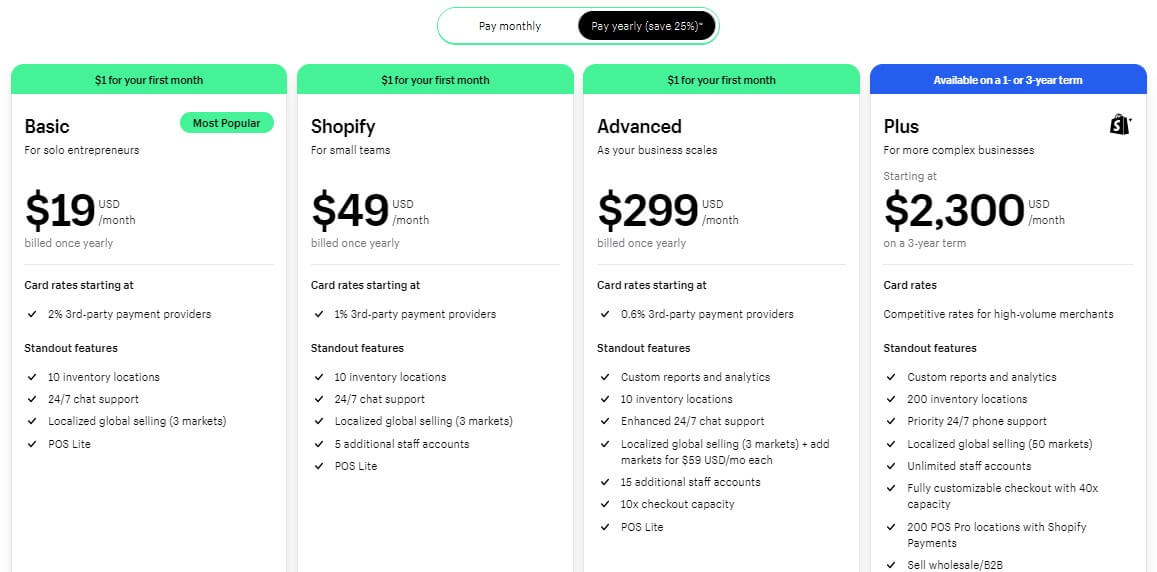
Shopify Features
Shopify Theme
Shopify offers a great range of templates, i.e., more than 60. These templates are specially designed to cater to various businesses’ needs and increase sales. The best part is that these themes are customizable, so you can make changes according to your needs.
Shopify themes are mobile-friendly and responsive, so the store performs well. However, some themes are not free; the costs vary from $140 to $180.
Shopify Apps
You will find a good range of Shopify apps that can be used for different business needs. There are more than 2400 add-ons and tools that you can use.
Shopify application development enables you to design your store, making it more functional and convenient for your customers. However, not all of these apps are free. Therefore, you will have to spend a few dollars to buy a bunch of useful applications for your store.
Customized Shopify Store Development
The price range for a fully custom Shopify store can be very broad, from simple to complex and highly specialized. A store with a very minimal level of customization could cost a few $1000, while a sophisticated store with advanced features and complex integrations easily goes around $10000.

How Much Does It Cost to Hire Shopify Store Setup Experts?
Shopify development costs vary significantly based on complexity, customization requirements, and the professional’s experience level.
Here’s a detailed breakdown to help you budget appropriately.
| Project Type | Freelancer Cost | Agency Cost | Timeline | Key Features |
| Basic Store Setup | $2,000-$5,000 | $5,000-$12,000 | 3-6 weeks | Template customization, basic apps, payment setup |
| Custom Design Build | $5,000-$12,000 | $12,000-$25,000 | 6-10 weeks | Custom theme, advanced features, app integrations |
| Enterprise Solution | $15,000-$35,000 | $25,000-$75,000 | 10-16 weeks | Complex functionality, custom apps, system integrations |
| Ongoing Maintenance | $500-$2,000/month | $1,000-$5,000/month | Ongoing | Updates, optimization, support, reporting |
Design Complexity Impact
Custom illustrations, animations, and unique layouts increase development time significantly. Stores requiring original photography or video content add $3,000-$15,000 to project costs.
App Integration Requirements
Each third-party app integration adds complexity. Simple integrations (email marketing, reviews) cost $200-$500 each, while complex ERP or CRM connections can cost $2,000-$8,000.
Product Catalog Considerations
Stores with extensive product catalogs require additional setup time for organization, SEO optimization, and performance considerations.
Expect 20-40% higher costs for catalogs exceeding 500 products.
Custom Functionality Development
Features like subscription management, complex product configurators, or membership areas require custom development, typically adding $3,000-$15,000 per major feature.

Factors Influencing the Cost of Hiring A Shopify Expert
Several factors influence the developer you hire to build a Shopify store. Project complexity is of the utmost importance. A simple shop with less customization will cost the least compared to complex shops requiring custom development, multiple integrations, headless architecture, and advanced features.
Additionally, the expert’s location and experience are equally crucial. The average cost of hiring an expert Shopify developer is higher, particularly if the professional lives in an expensive location.
Scope of work is an equally important aspect, covering design, development, app integration, SEO optimization, and ongoing maintenance. Clearly explain your needs when requesting a quote from Shopify experts so they can provide an accurate quote.
Where Can You Find Companies That Build Shopify Stores?
The quality of your Shopify store depends heavily on finding the right professional. Here are the most effective platforms and strategies for connecting with qualified developers.
Shopify Expert Marketplace
Shopify’s official expert directory features vetted professionals with verified credentials and client reviews. The platform provides transparency around pricing, specializations, and past project examples.
Advantages: Pre-vetted professionals, integrated communication tools, project protection. Considerations: Limited to Shopify-focused professionals, potentially higher costs
Professional Freelance Platforms
- Upwork: Offers detailed profiles, work history, and hourly rate transparency. Strong at finding specialists and comparing multiple candidates.
- Toptal: Focuses on top-tier freelancers with rigorous screening processes. Higher costs but consistently high-quality professionals.
- 99designs: Primarily design-focused, excellent for finding Shopify designers with strong visual portfolios.
Agency Directories and Networks
- Clutch.co: Comprehensive agency profiles with verified client reviews and detailed case studies. Excellent for finding agencies with specific industry experience.
- DesignRush: Curated directory of design and development agencies with transparent pricing and portfolio showcases.
- Google Search and LinkedIn: Direct outreach to agencies often yields better pricing and more personalized service than marketplace platforms.
Industry Referrals and Networks
Your most reliable sources often come from business networks, industry associations, and direct referrals from other business owners.
Chamber of Commerce connections, industry Facebook groups, and LinkedIn networks frequently provide trustworthy recommendations.
How to Structure Your Hiring Process
Once you’ve identified potential candidates, follow this systematic approach to ensure you hire the right professional:
Step 1: Define Your Project Requirements
Determine whether you need help with Shopify theme development, building custom apps, or enhancing store functionality. Identify specific goals, such as improving conversion rates, integrating payment gateways, or creating custom storefronts.
Step 2: Create a Detailed Job Post
Creating a well-crafted job post helps attract skilled Shopify developers:
- Use Clear Titles: Titles like “Shopify Developer Needed for Custom Theme Creation” or “Expert Shopify Partner for E-commerce Optimization” set proper expectations.
- Introduce Your Project: Explain your business goals, whether you’re launching a new Shopify site or enhancing an existing platform. Specify needs like app development, SEO optimization, or custom theme creation.
- Outline Responsibilities: Include tasks like integrating payment gateways, building custom storefronts, or improving site responsiveness. Highlight technical requirements like GraphQL, Liquid, or API integration knowledge.
- Specify Qualifications: Look for expertise in frontend and backend development, Shopify ecosystem familiarity, and experience delivering services for similar businesses.
- Provide Project Details: Include timeline, budget, and additional requirements like CLI tools, webhooks, or automation features.
Step 3: Review and Shortlist Candidates
Look for developers with experience in Shopify development services, a strong understanding of the Shopify ecosystem, and portfolios that showcase work on e-commerce stores similar to yours.
Step 4: Conduct Strategic Interviews
Ask about their experience with Shopify.dev, development processes, and compatibility with third-party tools like analytics platforms and social media integrations.
Step 5: Make Your Selection
Choose a developer who aligns with your project needs, set clear timelines and expectations, and maintain open communication throughout the project.
What Should You Look for When You Hire Shopify Experts?
Evaluating potential Shopify professionals requires looking beyond portfolio aesthetics to understand technical capabilities, communication skills, and business acumen.
Portfolio Quality Indicators
- Conversion-Focused Design: Look for stores with clear value propositions, intuitive navigation, and strong calls-to-action. The best developers understand that beautiful design must drive business results.
- Mobile Optimization: With 79% of Shopify traffic coming from mobile devices, examine how their stores perform on smartphones. Test loading speeds, checkout flows, and navigation usability.
- Industry Relevance: Professionals with experience in your sector understand specific challenges, compliance requirements, and customer expectations. A developer experienced with fashion e-commerce brings different insights than one focused on B2B industrial products.
Technical Competency Assessment
- Speed Optimization Knowledge: Ask candidates about their approach to page speed optimization. Qualified professionals should discuss image compression, code minification, and app selection strategies.
- SEO Understanding: Shopify SEO requires specific knowledge of platform limitations and opportunities. Candidates should demonstrate an understanding of URL structures, meta tag optimization, and technical SEO considerations.
- App Integration Experience: Inquire about their experience with apps relevant to your business model. Understanding which apps work well together and potential conflict points demonstrates more profound platform knowledge.
Communication and Project Management Skills
- Response Time and Clarity: Pay attention to how quickly and clearly candidates respond to initial inquiries. This often predicts communication quality throughout the project.
- Project Planning Approach: Strong professionals provide detailed project timelines, milestone definitions, and clear deliverable expectations. Avoid candidates who offer vague estimates or rush through discovery calls.
Problem-Solving Orientation: The best Shopify experts ask probing questions about your business model, target audience, and growth plans. They should challenge assumptions and provide strategic recommendations beyond technical implementation.
How Do You Manage the Shopify Store Development Process?
Successful Shopify projects require structured management approaches that balance oversight with creative freedom.
Here’s how to maintain control while enabling your hired team to deliver their best work.
Project Kickoff and Requirements Documentation
Start with comprehensive requirements documentation that covers business objectives, technical specifications, and success metrics.
Include target audience definitions, competitor analysis, and specific functionality requirements.
This documentation becomes your project’s north star and prevents scope creep.
Milestone-Based Progress Tracking
Structure your project around clear milestones with specific deliverables and approval gates. Typical milestones include:
- Discovery and Strategy (Week 1-2): Wireframes, user experience maps, technical specifications
- Design Phase (Week 3-5): Homepage design, product page layouts, checkout flow mockups
- Development Phase (Week 6-9): Functional store build, app integrations, testing
- Launch Preparation (Week 10-11): Final testing, content population, analytics setup
- Go-Live and Optimization (Week 12+): Launch execution, initial optimization, performance monitoring
Communication Protocols and Tools
Establish regular check-in schedules and preferred communication methods.
Most successful projects use project management tools like Asana or Monday.com for task tracking, Slack for daily communication, and weekly video calls for detailed progress reviews.
Quality Assurance and Testing Procedures
Before launch, implement comprehensive testing procedures covering:
- Cross-browser compatibility (Chrome, Safari, Firefox, Edge)
- Mobile responsiveness across different device sizes
- Checkout flow functionality and payment processing
- Loading speed optimization and performance metrics
- SEO elements and analytics configuration
Challenges of Building A Shopify Store By Yourself
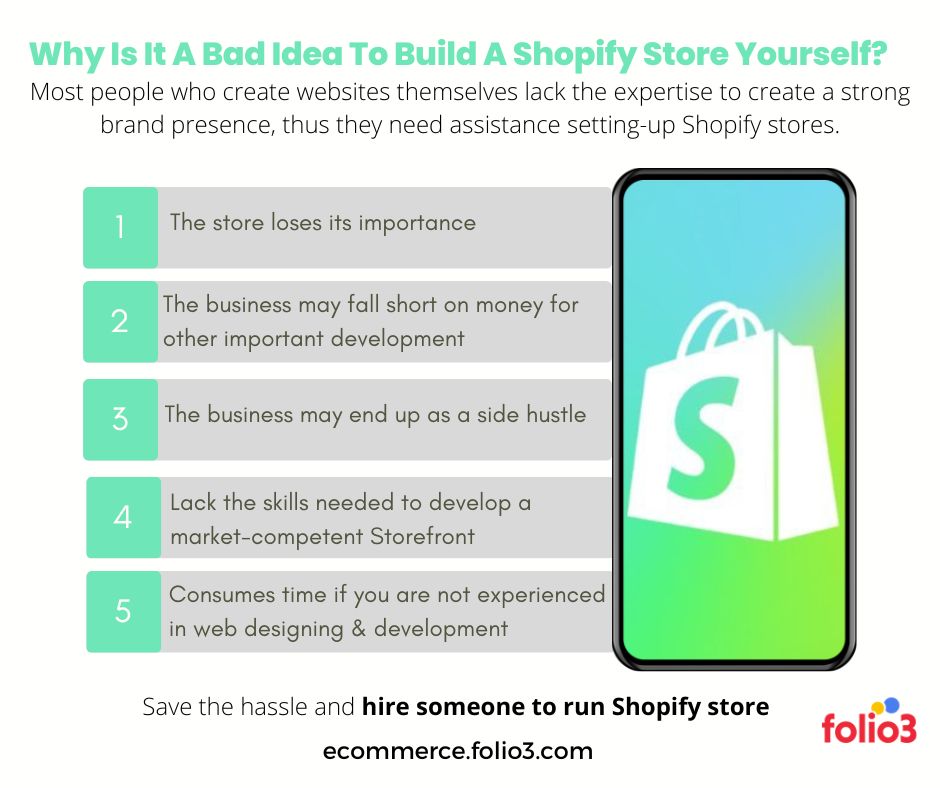
While Shopify is user-friendly, creating a successful e-commerce store requires much more than setting up. Here’s why the DIY approach may not be the best:
Time Consumption
Setting up an online store is time-consuming. This time can be better invested in the core business activities like product development, marketing, and customer service.
Lack of Expertise
Setting up an online store requires some knowledge about design, development, marketing, and SEO-related problems.
Missed Opportunities
Shopify experts know about the new trends, best practices, and changes in the platform. In case you are doing everything on your own, you can miss some key opportunities for optimizing conversion and sales.
Potential mistakes and inefficiencies
Mistakes in the setup can create technical issues, a poor user experience, and lost sales. However, professionals can avoid these pitfalls.
Limited Scalability
A DIY store might not be designed with future growth in mind. A professional would be able to build in scalability.
How Long It Takes To Create A Shopify Store
Shopify is a platform that offers great opportunities to any kind of business. The fastest and easiest way to sell goods and services online – that’s Shopify.
However, when it comes to opening a Shopify store, using Shopify integration services, or even migrating to a Shopify store from any other eCommerce platform, it usually requires you to do your homework first, where you consider scalability and cost associated with customization and time.
The time to create a Shopify store depends on the complexity of your store. It can take up to 3-5 days to set up a small Shopify store with no 3rd-party integrations and less than 100 products, whereas it can take up to 2-4 months to set up a complex Shopify eCommerce store where you need 3rd-party plugins/add-ons to your store.

What Types of Shopify Experts Can You Hire?
Understanding Shopify Developer Expertise
A Shopify developer is a professional who specializes in building and optimizing Shopify websites for businesses operating on the Shopify platform.
Their expertise spans Shopify theme development, custom apps, and integrations that enhance functionality and improve the customer experience.
With proficiency in Liquid, HTML, CSS, and JavaScript, Shopify developers are equipped to create visually appealing and highly functional e-commerce websites that cater to the unique needs of Shopify merchants.
They work across the Shopify ecosystem, including creating custom storefronts, integrating tools like payment gateways, and using Shopify.dev resources to deliver tailored solutions.
Understanding the different categories of Shopify professionals helps you match your needs with the right expertise level and price point.

Freelance Shopify Designers
Individual freelancers typically specialize in specific aspects of store development.
You might hire a Shopify designer for visual elements and user experience, then work with a separate developer for technical customizations.
Freelancers work nicely for straightforward projects with clear scopes.
Best for: Simple stores, specific customizations, budget-conscious projects. Typical timeline: 3-6 weeks Average investment: $2,000-$8,000
Shopify Development Agencies
Full-service agencies provide comprehensive solutions, including strategy, design, development, and ongoing support. Partnering with a trusted Shopify Plus ecommerce agency can help you scale faster, integrate complex systems, and deliver a seamless shopping experience across channels.
Many agencies specialize in specific industries (fashion, B2B, subscription commerce) and bring deep vertical expertise.
Best for: Complex stores, enterprise needs, and ongoing support requirements. Typical timeline: 6-12 weeks Average investment: $8,000-$50,000+
Shopify Plus Partners
For enterprise-level businesses, Shopify Plus Partners offer specialized expertise in advanced features, custom app development, and large-scale implementations.
These partners understand complex business requirements like multi-store management, advanced analytics, and enterprise integrations.
Best for: High-volume businesses, complex B2B needs, multi-location operations. Typical timeline: 8-16 weeks. Average investment: $25,000-$150,000+
Specialized Shopify Consultants
Some professionals focus on specific aspects like conversion optimization, SEO, or app development.
These specialists often work alongside your primary developer to address particular needs.
Best for: Targeted improvements, specific expertise gaps, optimization projects
What To Look For In Companies That Build Shopify Stores
When hiring a top Shopify development agency for your store, the complexity of your project and your personal preferences matter a lot. You might want more technical integration and high customization than your competitor.

If that’s the case, it’s only crucial to seek an expert with extensive experience. Here’s what you need to look for in a Shopify development company:
- Understanding and Knowledge: A good and reliable Shopify development company can understand your requirements well if they already have the necessary knowledge to build a store on Shopify. If they can understand what your business is about, they can serve you well. Moreover, they must know how to best target the audience. You can also get help building marketing strategies.
- Portfolio: A good Shopify company/expert will have a strong portfolio. Look for previous projects and launched websites. The aforementioned Shopify experts may be highly qualified in education, but you should check if they have the creative knowledge and experience to complete the task. By looking at a portfolio, you can measure the quality of work. Check your requirements to see if the style of work fits your needs.
- Reviews: Read what their clientele has to say. If the comments are fine and mention their skill in building a Shopify store, then you will know that is your way to go.
- Additional Services: A good resource will provide supplementary services like CRO and SEO.
Conclusion
The decision to hire someone to build a Shopify store represents a strategic investment in your business’s digital future.
As e-commerce continues maturing, the gap between professional and DIY implementations will only widen.
Looking ahead to 2025 and beyond, successful e-commerce businesses will need Shopify stores that seamlessly integrate with emerging technologies like AR product visualization, AI-powered customer service, and advanced analytics platforms.
The Shopify website builder you choose today should demonstrate familiarity with these trends and the technical foundation to support future innovations.
Your next step is clear: use this guide’s framework to evaluate potential partners, ask the right questions, and select professionals whose expertise aligns with your business goals.

Frequently Asked Questions
How long does it typically take to hire someone to build a Shopify store?
Most Shopify store projects take 4-12 weeks, depending on complexity.
Simple template customizations require 3-6 weeks, while custom builds with advanced features need 8-12 weeks. Enterprise implementations can extend to 16+ weeks.
Should I hire a freelancer or an agency for my Shopify store?
Freelancers work nicely for straightforward projects under $10,000 with a clear scope.
Agencies provide better support for complex builds, ongoing maintenance needs, and projects requiring multiple skill sets like design, development, and marketing.
What’s the difference between Shopify and Shopify Plus development costs?
Shopify Plus projects typically cost 2-3x more due to advanced features, custom app requirements, and enterprise integrations.
Basic Shopify stores range from $2,000-$25,000, while Shopify Plus implementations start around $25,000 and can exceed $150,000.
How do I know if a Shopify expert is legitimate?
Check their Shopify Expert marketplace profile, review client testimonials, examine portfolio stores for functionality, and verify their technical knowledge through detailed discovery calls.
Legitimate experts provide transparent pricing and detailed project timelines.
What should I prepare before hiring Shopify store setup experts?
Here’s a checklist:
- Gather your brand assets (logos, images, copy)
- Define your product catalog
- Identify required integrations (payment, shipping, marketing tools)
- Set clear budget parameters
- Document your business requirements and target audience details.
Can I make changes to my store after the professional builds it?
Yes, but the extent depends on how the store was built. Template-based builds allow easier modifications, while custom-coded solutions may require developer assistance.
Discuss modification processes and costs upfront with your chosen professional.
How much ongoing support do I need after launch?
Most stores benefit from 5-10 hours monthly support for updates, optimization, and troubleshooting.
High-traffic stores or those with complex integrations may need 20+ hours monthly. Many professionals offer retainer packages for ongoing maintenance.
See more: Shopify Storefront MCP: How AI Shopping Assistants Convert More Customers

Engineering Architect

Lead Software Engineer

Senior Software Engineer

Frontend Shopify Engineer

Shopify App Developer

AI & Automation Specialist