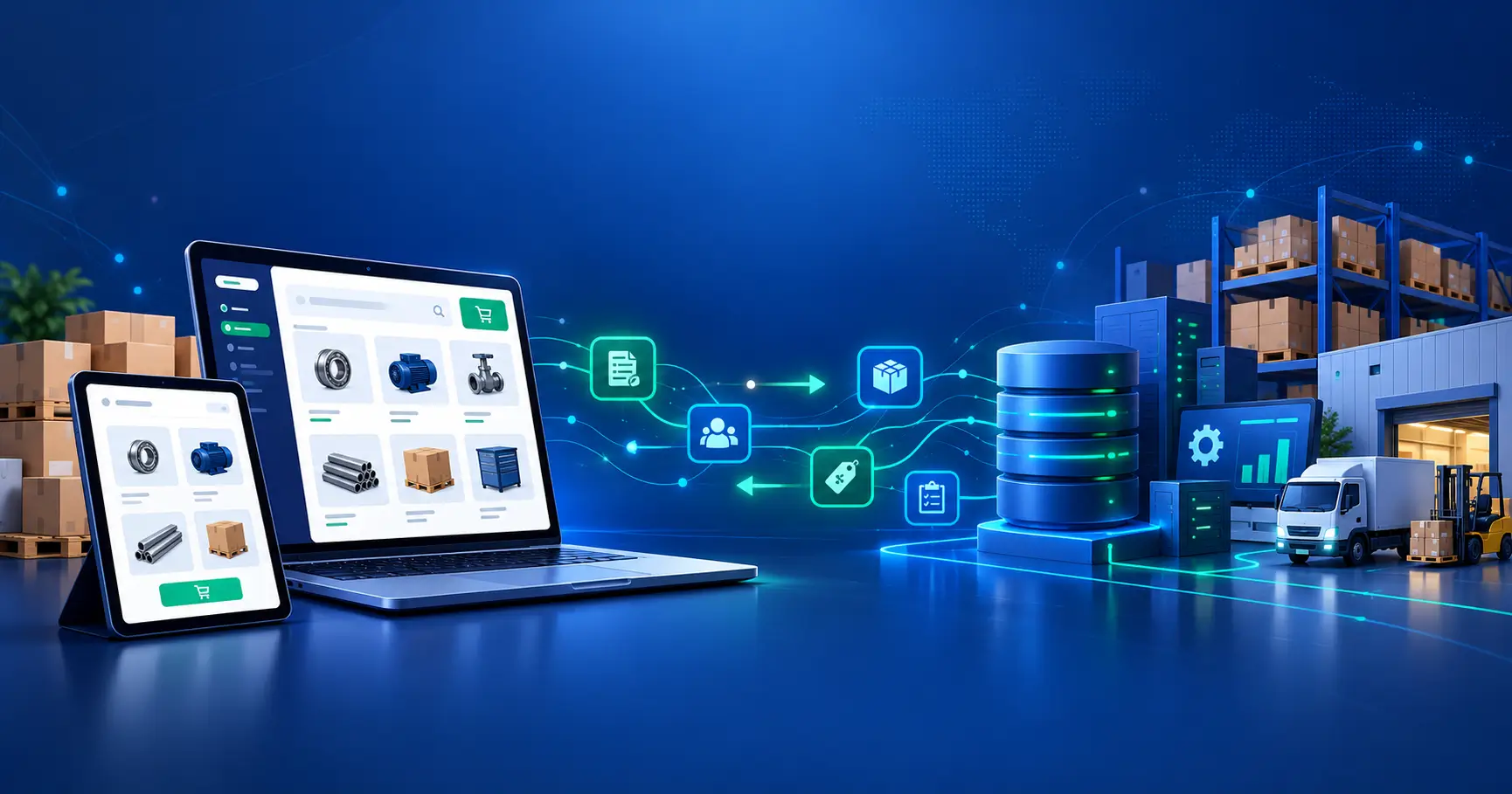
B2B brands are rewriting the playbook. They’re no longer waiting for distributors to push their products. Today’s B2B brands launch direct-to-consumer (DTC) channels to sell directly to end-users, build brand loyalty, and capture margin their wholesalers used to take.
Historically, B2B manufacturers sold wholesale to distributors, who marked up and resold to end-users. Margin was compressed; customer relationships were opaque; brand was secondary to price. That’s changing. B2B brands now see a DTC channel as a competitive necessity, not a nice-to-have.
Summary
This guide covers why B2B brands are embracing DTC, which models work best, and how to structure a B2B and DTC operation that actually profits. You’ll learn:
- Three distinct DTC models for B2B brands (full DTC, hybrid, tiered)
- How to avoid common pitfalls (distributor conflict, inventory misalignment)
- Customer demand generation tactics that work for B2B
- Technical architecture choices (one store vs. dedicated)
- Real-world examples of B2B brands successfully running parallel channels
- Pricing strategies that preserve distributor margins while capturing new revenue
Why B2B Brands Are Going DTC
Historically, B2B manufacturers sold wholesale to distributors, who marked up and resold to end-users. Margin was compressed; customer relationships were opaque; brand was secondary to price.
That’s changing. B2B brands now see a DTC channel as a competitive necessity, not a nice-to-have.
The numbers drive it home. When a software components manufacturer launches DTC:
- They capture 40–60% more margin per sale (no distributor markup).
- They own the customer relationship and can upsell, cross-sell, and gather feedback directly.
- They build brand awareness; end-users recognize the logo and specifications.
- They reduce forecasting risk by seeing true demand signal, not distributor orders.
A DTC channel isn’t cannibalization. It’s complementary. Distributors stock SKUs for bulk buyers. Your DTC channel captures the small orders, the custom requests, and the time-sensitive need. Both thrive. If you’re planning a B2B and DTC strategy, our Shopify B2B eCommerce development agency can architect the right setup for your business model.
Three Models for B2B Brands Using DTC Channels
DTC Channel for B2B Brands: Model 1 – Full DTC Operation (Manufacturer Direct)
You run your own direct-to-consumer storefront at consumer-friendly pricing with low minimum order quantities—often as few as 1 unit.
Example: Adata (semiconductor manufacturer) sells SSDs and RAM through their DTC shop at retail pricing alongside their wholesale operation.
Pros:
- Highest margin capture.
- Complete brand control.
- Direct customer feedback.
Cons:
- High operational overhead: order fulfillment, customer service, returns.
- Competitive against your own distributors (managed via tiering, minimum volumes).
- Marketing expense to build awareness.
Best for: Manufacturers with existing brand recognition or unique products with limited distributor reach.
DTC Channel for B2B Brands: Model 2 – Hybrid (Marketplace + DTC)
You sell your products wholesale to Amazon, eBay, and other marketplaces while running your own branded DTC store.
Example: Industrial fastener companies sell through Amazon Industrial and their own B2B DTC site, capturing both impulse-buy and bulk-order revenue.
Pros:
- Marketplace handles fulfillment, payment processing, and customer acquisition.
- Your DTC store captures high-value wholesale orders without Amazon commission.
- Lower operational burden than full DTC.
Cons:
- Marketplace commissions (15%+) reduce per-unit margin on marketplace sales.
- Brand dilution (customers see you through Amazon, not your own brand).
- Pricing misalignment (hard to prevent arbitrage between DTC and marketplace).
Best for: Brands with existing marketplace presence who want an owned channel for premium pricing.
DTC Channel for B2B Brands: Model 3 – B2B + Owned DTC with Distributor Tiering
You sell wholesale to large distributors at volume pricing while maintaining your own DTC storefront for smaller orders and regional fills.
Example: Office furniture manufacturers sell to large corporate buyers through distributors (who get net-30, volume discounts) and sell direct to small businesses and end-users via their DTC site at higher per-unit prices.
Pros:
- Avoids direct competition with distributors (they handle bulk; you handle small orders).
- Protects distributor margin (they move volume; you move premium/small items).
- Multiple revenue streams with clear separation.
Cons:
- Channel conflict management (distributors may resent your DTC) requires careful tiering.
- More complex operations (two distinct order fulfillment workflows).
- Inventory complexity (balancing wholesale allotments vs. DTC stock).
Best for: B2B brands with existing distributor relationships who want to add a growth channel without alienating partners.
Direct-to-Consumer (DTC) Strategy for B2B Brands: 6 Pitfalls & How to Fix Them
Pitfall 1: Undercutting Your Distributors
If your DTC pricing is significantly lower than what distributors sell at, they’ll rightfully feel betrayed. You’ve trained customers to buy from you directly, bypassing the partner who helped build scale.
Fix: Use tiered pricing. DTC pricing can be lower than distributor MSRP but above distributor cost. A distributor buying 1,000 units gets net-30 pricing ($50/unit cost) and can retail at $120. Your DTC sells at $85–95, covering your fulfillment costs and preserving distributor margin.
Pitfall 2: Inconsistent Product Assortment
You stock everything on DTC but leave gaps, or vice versa. Customers have a fractured experience.
Fix: Align assortment between wholesale and DTC. Core SKUs are available everywhere. DTC can carry limited editions or slower-moving items. Wholesale handles bulk variants.
Pitfall 3: Disconnected Inventory Management
Wholesale inventory and DTC inventory sit in separate systems. A stock-out in one channel appears as overstock in another.
Fix: Use unified inventory software (TraceLink, Blue Yonder, or Shopify + integrations) that pulls from one master SKU table and allocates across channels dynamically. When wholesale inventory and DTC inventory sit in separate systems, stock-outs in one channel appear as overstock in the other, creating waste. Implementing proper Shopify inventory management prevents these costly misalignments across your wholesale and DTC operations.
B2B and DTC Integration: Architecture Choices (One Store vs. Dedicated)
Most B2B brands running parallel channels use one of two architectures:
Architecture 1: One Shopify Store with Two Sales Channels
What it is: Your products live in Shopify. B2B wholesale uses the B2B Sales Channel (separate login, wholesale pricing). DTC uses the public storefront (retail pricing). Learn more about Shopify B2B wholesale features to understand how to structure both channels efficiently.
Pros:
- One inventory source of truth.
- Simpler integrations with ERP/WMS.
- Single admin backend.
Cons:
- Complex checkout logic; both customer types see some overlap in the UI.
- Scaling friction if B2B volume grows dramatically.
Best for: Brands where DTC volume is secondary to B2B (under 30% of revenue).
Architecture 2: Dedicated Stores (Blended Risk)
What it is: Separate Shopify instances for B2B (using Shopify Plus if volume justifies) and D2C (standard Shopify). Inventory syncs via API.
Pros:
- Purpose-built UX for each channel.
- Independent scaling; each store handles its own performance.
- Clear data separation.
Cons:
- Two Shopify subscriptions (Plus is expensive).
- Inventory sync overhead; out-of-sync risk.
- Operational complexity.
Best for: Brands where B2B and DTC are co-equal revenue streams (40/60 or 50/50 split).
Customer Demand Generation Through DTC: Three Tactics
Tactic 1: Build Brand Awareness at the End-User Level
Wholesale relationships are transactional. You’re a line item in a distributor’s catalog. DTC lets you build a brand.
How it works:
- Create content around your product category (not just your products): “How to Select Industrial Fasteners,” “Best Practices for Power Supply Selection.”
- Sponsor technical communities (Reddit, Stack Exchange, specialized forums where your buyers hang out).
- Build email sequences and guides that make you a trusted advisor, not a vendor.
Result: When an engineer needs your product, they search for it by name and come to you first.
Tactic 2: Create Demand Via Limited Editions or Exclusive DTC Offerings
Offer products or configurations on DTC that aren’t available through distributors. This creates urgency and gives end-users a reason to visit your store directly.
Example: A semiconductor manufacturer offers pre-configured, tested kits on their DTC site that aren’t available through standard wholesale. Hobbyists and small businesses buy the kits; large OEMs still buy bulk components wholesale.
Result: Your DTC becomes a demand incubator. Products that sell well directly can be pitched to distributors next quarter based on proven demand.
Tactic 3: Customer Data and Feedback Loops
DTC gives you direct visibility into what end-users actually want.
How it works:
- Track meaningful KPIs: sell-through rates, advertising cost of sales (ACOS), return rates, and order frequency
- Survey customers post-purchase. What problem did they solve? What would they buy next?
- Use this feedback to influence your wholesale assortment and your manufacturer roadmap
- Monitor sell-through velocity and adjust wholesale inventory levels based on proven DTC demand
Result: You stop guessing what distributors want and start knowing what end-users actually buy. DTC success metrics (high ACOS efficiency, strong repeat order rates) directly inform wholesale strategy.
Wholesale and DTC Channels in Action: Three Real-World Examples
Example 1: Industrial Components Manufacturer
The Setup:
- Wholesale channel: Bulk orders, net-30 payment terms, large industrial distributors, minimum 100 units.
- DTC channel: Shopify store, retail pricing, 1-unit minimums, credit card or PayPal payment.
The Result:
- Wholesale revenue: $8M/year (40% margin) vs. DTC revenue: $2M/year (65% margin)
- DTC customers often graduate to wholesale relationships as their operations scale
- Blended margin improved 8% year-over-year, driven by DTC’s higher per-unit contribution
Example 2: B2B SaaS + Physical Hardware Bundle
The Setup:
- Wholesale: Enterprise software and hardware bundles sold via resellers.
- DTC: Smaller enterprise and SMB-friendly “Starter Pack” bundles at lower price points.
The Result:
- DTC acquired 1,500 new customers in year one.
- 22% of DTC customers upgraded to enterprise wholesale contracts within 18 months.
- Customer acquisition cost (CAC) was 35% lower through DTC than through enterprise sales team.
Example 3: Industrial Equipment Manufacturer
The Setup:
- Wholesale: Full equipment + installation + support through regional distributors.
- DTC: Replacement parts, accessories, and consumables sold direct at margin-friendly pricing.
The Result:
- DTC captured $3M in recurring consumables revenue (printer ink model).
- Distributors continued to dominate equipment sales but didn’t feel threatened.
- Reduced distributor conflict because DTC focused on a different product category (parts, not full equipment).
Choosing Between B2B, DTC, or Both
| Factor | B2B Wholesale Only | DTC Only | Both |
| Operational Complexity | Low | High | Very High |
| Margin per Unit | 30–40% | 50–65% | 40–55% (blended) |
| Customer Acquisition Cost | Medium | High | Medium |
| Revenue Visibility | Opaque (distributor orders) | Transparent | Transparent (if integrated) |
| Time to Profitability | Fast | Slow (6–12 months) | Slow (9–18 months total) |
| Scaling Headroom | Limited to distributor reach | Large but expensive | Largest, if managed right |
| Risk | Distributor dependency | High customer CAC | Balanced |
| Brand Control | Low | High | High |
Key Takeaways
- B2B brands are moving to DTC not to abandon wholesale, but to complement it. End-user demand data, higher margins, and direct relationships are the payoff.
- Model choice matters. Full DTC is capital-intensive. Hybrid (marketplace + DTC) is low-risk. Tiered (wholesale + DTC) preserves distributor relationships.
- Customer demand generation works. When you own the customer, you own the feedback loop. You learn what sells before your distributors do.
- Inventory sync is mandatory. If your B2B and DTC channels don’t share inventory, you’ll overstock in one and understock in the other.
- Pricing architecture prevents conflict. Tiered pricing lets distributors and DTC coexist without cannibalizing each other.
Frequently Asked Questions
Will a DTC channel make my distributors angry?
Only if you undercut them or take volume they were selling. If you’re capturing orders they never saw (small businesses, end-users, custom requests), they typically support it. Communicate early and often about your tiering strategy.
How long until DTC is profitable?
Plan for 12–18 months to profitability, depending on your product category and CAC. Hardware often takes longer than software. Most brands break even on the channel investment by month 18–24.
Should I use Shopify or a custom platform for DTC?
Shopify works well for most B2B brands going DTC. It handles complex pricing, integrates with inventory systems, and supports both B2C and B2B workflows. Custom platforms are overkill unless you have truly unique requirements.
Can I integrate a DTC Shopify store with my wholesale ERP?
Yes. Use Zapier, custom APIs, or middleware (Celigo, Jitterbit) to sync Shopify with your ERP. Shopify natively supports NetSuite integration, SAP connections, and Shopify QuickBooks integration, making it easier to keep wholesale and DTC data in sync. Most integrations work well; plan for 4–8 weeks of setup and testing.
What’s the minimum DTC volume before it makes financial sense?
If you expect $500K+ in DTC annual revenue within 18 months, DTC pays for itself. Below that, the operational overhead isn’t justified. Test first with a limited product assortment on a marketplace (Amazon Industrial, Alibaba) before investing in your own store.
How do I prevent pricing arbitrage between wholesale and DTC?
Use geofencing: DTC prices vary by geography. Monitor distributor prices and adjust DTC pricing to stay above cost but below MSRP. Communicate price changes to distributors before rolling them out.
Can DTC work for commoditized products?
It’s harder because brand differentiation is low and CAC is high. DTC works best for products with technical depth, high engagement (customers need support), or unique configurations. Commodity products are better served by marketplace channels (Amazon, Alibaba).
Next Steps
Start by analyzing your current customer base. How much revenue is already coming from end-users buying through distributors? That’s your DTC market opportunity. Then model the three DTC models above and pick one that aligns with your margin targets and operational capacity.
If you’re ready to launch or expand your B2B and DTC operation, explore Shopify B2B features and B2B ecommerce strategies that support parallel channels. Or connect with our team to design an architecture that keeps your wholesale partners happy while capturing new revenue directly from end-users.