If you’ve been following ecommerce trends, you’ve probably noticed something significant: AI-powered shopping is no longer hypothetical.
With ChatGPT’s new Instant Checkout feature, over a million Shopify merchants can now sell directly through conversational AI, reaching hundreds of millions of weekly users.
For business leaders who’ve been watching the AI space cautiously, wondering when it’ll actually deliver value—this is that moment.
The shopify chatgpt integration isn’t just another tech announcement. It’s a fundamental shift in how people discover and buy products.
ChatGPT has become the dominant generative AI platform in the United States, and consumer shopping behavior is shifting rapidly toward AI-assisted discovery. Your customers are already there.
The question isn’t whether to integrate AI into your ecommerce strategy—it’s how quickly you can do it effectively.
Source: ChatGPT
Summary
This guide covers the essential aspects of integrating ChatGPT with your Shopify store:
- The official Shopify-OpenAI partnership that enables direct selling through ChatGPT conversations with Instant Checkout
- Multiple integration approaches, from the native commerce channel to third-party AI chatbots and content generation tools
- Quantifiable benefits including 10-12% revenue increases, 25% conversion improvements, and 93% automated customer service resolution
- Practical implementation strategies for customer service automation, SEO optimization, and product content creation
- Realistic ROI expectations with specific use cases and measurable outcomes
- Preparation steps to ensure your store is AI-ready and discoverable in conversational commerce
What’s Actually Happening With Shopify ChatGPT Integration?
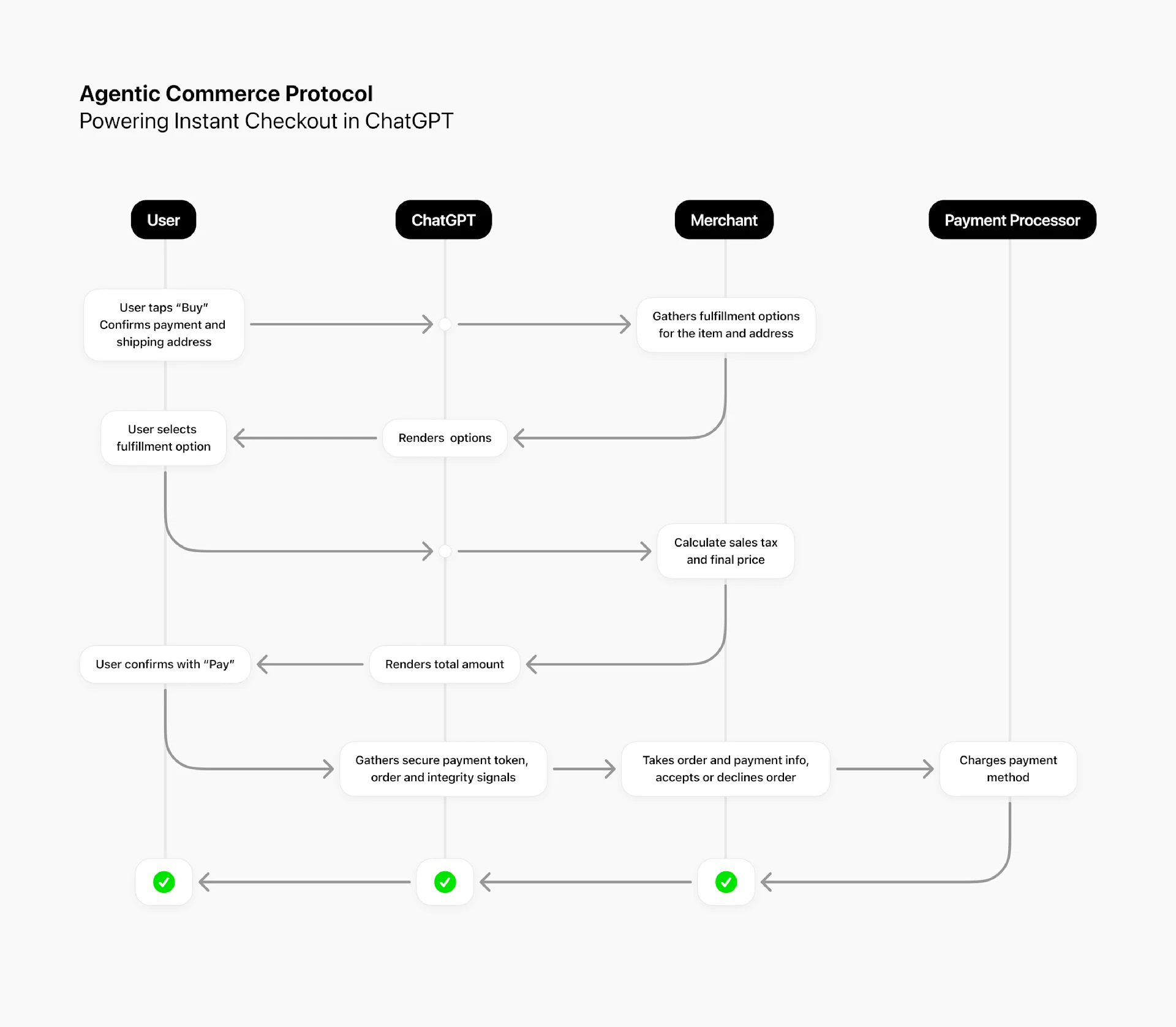
In September 2025, OpenAI and Shopify announced a partnership enabling merchants to sell directly through ChatGPT conversations.
The integration uses OpenAI’s Agentic Commerce Protocol, co-developed with Stripe, allowing users to complete purchases without leaving the chat interface.
Here’s what this means in practice: Someone asks ChatGPT “best running shoes under $100,” and they see relevant products from Shopify merchants.
If a product supports Instant Checkout, they can buy it right there—no redirects, no links, just a seamless transaction.
Orders flow directly into Shopify’s software, merchants remain the merchant of record, and they own the customer relationship. Merchants pay a small fee on completed purchases, but the service is free for users and doesn’t influence ChatGPT’s product rankings.
Beyond Direct Sales: The Broader ChatGPT for Shopify Ecosystem
The chatgpt shopify integration actually encompasses three distinct approaches:
| Integration Type | Purpose | Implementation |
| Instant Checkout | Direct sales through ChatGPT | Official Shopify sales channel (rolling out 2025) |
| AI Chatbots | Customer service automation | Third-party apps (Manifest AI, Rep AI, HeiChat) |
| Content Generation | Product descriptions, SEO, marketing | Apps like Yodel, TinyIMG, ChatGPT-AI |
Most businesses will benefit from a combination of these approaches rather than picking just one.
Why This Matters More Than Most AI Announcements
I’ve seen plenty of AI hype cycles. What makes this different is the convergence of scale, infrastructure, and actual consumer behavior.
The Numbers Tell the Story
The AI-powered ecommerce market is expected to grow from approximately $9 billion in 2025 to over $22 billion by 2032.
But market size projections are meaningless without real business impact. Here’s what matters:
Companies leveraging AI see an average revenue increase of 10-12%, with projections showing AI could enhance profitability by 59% by 2035.
The vast majority of customer questions are resolved without human intervention when handled through conversational AI. AI-powered bots increase lead conversions by 25%.
Those aren’t hypothetical benefits. They’re measurable improvements happening right now in stores that have implemented AI effectively.
The Consumer Behavior Shift
Nearly 40% of consumers who have used generative AI have applied it to online shopping activities, and the majority plan to increase their usage in 2025.
Consumer adoption has jumped dramatically year-over-year, with shopping representing one of the fastest-growing use cases for AI tools.
This isn’t early adopter territory anymore. Your customers are actively using AI for shopping decisions.
If your products aren’t discoverable and purchasable in these AI conversations, you’re simply not present in a growing portion of the buying journey.
How Should Business Leaders Think About AI Shopping Shopify Integration?
The shift to AI-powered commerce creates both opportunities and requirements. Let me break down what actually matters for decision-makers.
What Makes Shopify Instant Checkout Different
The Agentic Commerce Protocol is an open standard that allows AI agents, people, and businesses to work together to complete purchases across platforms, payment processors, and business types.
Think of it as the infrastructure layer that makes conversational commerce possible at scale. OpenAI open-sourced the protocol so any retailer or business can build shopping integrations, but Shopify merchants get native access.
The Competitive Timeline
Over a million Shopify merchants are joining Instant Checkout, with brands like Glossier, SKIMS, Spanx, and Vuori already confirmed. Early adopters often get visibility advantages—OpenAI might showcase partner stores at launch, and the algorithm may favor properly configured merchants.
Being among the first thousand stores to integrate could mean capturing significant market share before competitors even understand what’s happening. Being the ten thousandth means you’re just keeping pace.
How Can You Actually Add ChatGPT to Shopify Store Operations?
Let’s move from strategy to implementation. There are three primary ways to use chatgpt for shopify stores, each serving different business needs.
Approach 1: Prepare for Native Instant Checkout
Shopify has created a dedicated sales channel for ChatGPT, where merchants can apply to make their products available for purchase through ChatGPT.
The rollout is ongoing, prioritizing merchants with strong product data and clear descriptions.
Immediate action steps:
- Optimize product information. AI performs better with clear, detailed product descriptions that accurately convey value without marketing fluff. Write for someone who’s comparing options through conversation, not browsing a visual storefront.
- Test AI understanding. Go to ChatGPT and ask about products in your category. See what the AI knows, what it recommends, and whether your brand appears. This is the new version of checking your Google rankings.
- Ensure technical readiness. Real-time pricing, inventory data, product images, and variants need to be accurate and accessible. AI commerce requires tighter operational discipline than traditional ecommerce.
Approach 2: Implement AI Chatbots for Customer Service
By 2028, approximately one-third of online retailers will be using advanced AI agents—up from less than 1% today.
Customer service automation offers immediate ROI with relatively straightforward implementation.
The Top Shopify ChatGPT apps for customer service include:
| App | Best For | Key Feature | Pricing |
| Manifest AI | Product recommendations | AI shopping assistant with quiz functionality | Free plan available |
| Rep AI | Behavioral targeting | Rescue Algorithm identifies abandoning shoppers | Free trial, usage-based |
| HeiChat | Multi-model support | Uses both ChatGPT and Claude AI | Free trial available |
| Juphy AI | FAQ automation | Syncs with product catalog and policies | From $19/month |
These apps provide 24/7 customer support, handle product inquiries, track orders, and offer personalized recommendations.
The better ones integrate with your existing customer service tools like Gorgias and Klaviyo.
What to expect: Chatbots handle transactional queries like returns and cancellations with up to 58% success rates, though more complex issues like billing disputes see lower resolution rates around 17%. The key is proper configuration and knowing when to escalate to humans.
Approach 3: Leverage AI Content Creation Shopify Tools
Content generation might seem less exciting than direct sales, but it’s often where businesses see the fastest time-to-value.
Tools like Yodel and ChatGPT-AI Product Description generate SEO-optimized product descriptions, metadata, and marketing content.
TinyIMG offers AI-powered metadata generation and keyword research, while VerbiAI optimizes image alt texts in bulk.
Practical Implementation:
- Start with your lowest-performing products. Generate 5-10 AI descriptions, test them against your originals, and measure conversion rate changes.
- Use AI for metadata across your entire catalog. Automated SEO markup ensures product descriptions, titles, and meta tags align with best practices.
- Create content variations for testing. AI excels at generating multiple versions quickly, perfect for A/B testing.
What Results Should You Actually Expect From Shopify AI Integration?
Let’s set realistic expectations based on actual implementation data rather than vendor promises.
Customer Service Automation
Studies analyzing millions of shopping sessions show that the vast majority of customer questions can be resolved without human intervention when AI is properly implemented.
But that doesn’t mean perfect customer satisfaction—it means most inquiries don’t require escalation.
However, 40% of shoppers express frustration over the absence of human assistance in AI-powered customer service, and 21% doubt the dependability of AI-generated recommendations.
The solution isn’t abandoning AI—it’s implementing it thoughtfully with clear paths to human support.
Realistic targets:
- 60-80% reduction in response time for common queries
- 30-50% reduction in customer service workload
- 15-25% improvement in conversion for engaged chatbot users
Content and SEO Performance
AI-driven SEO improvements help attract organic traffic, the most cost-effective customer acquisition channel.
Brands using AI SEO tools with automated meta tags, internal linking, and schema markup see improvements in organic rankings.
But here’s the reality: AI-generated content without human review and brand voice adjustment performs poorly.
A significant majority of retailers believe they’re delivering personalized experiences, but only about one-third of consumers agree, a gap that often comes from over-automation without strategic oversight.
Direct Sales Impact
Personalized product recommendations driven by AI can deliver substantial revenue increases when implemented effectively, some brands report improvements of 40% or higher.
Advanced personalization strategies combining AI with human curation can lead to even more dramatic results, including tripled revenue and doubled conversion rates.
The wide range reflects implementation quality. Businesses that treat AI as a complete solution see modest improvements.
Those that use AI to augment human strategy and maintain strong product-market fit see transformational results.
How Do You Prepare Your Shopify Store for AI Ecommerce Shopify?
Preparation matters more than speed for most merchants. Here’s what actually needs to happen before you flip the switch.
Create AI-Readable Product Information
AI doesn’t browse visually. It reads text and structured data. Shopify powers product discovery with real-time data like pricing, inventory, images, and variants in a format AI understands.
Required elements:
- Clear, descriptive product titles (not just brand + model number)
- Detailed descriptions that answer common questions
- Accurate categorization and attributes
- Up-to-date pricing and inventory
- High-quality images with descriptive alt text
Test by asking AI about your products—if it hallucinates or provides wrong information, that indicates unclear data.
Optimize for Conversational Discovery
People interact with AI differently than search engines. They ask questions in natural language: “What’s the best gift for a ceramics lover under $50?” not “ceramics gifts $50.”
Consider this prompt research for AI, similar to keyword research for SEO. Identify the questions people ask about products in your category and ensure your content answers them clearly.
Build Supporting Infrastructure
More than half of businesses cite data privacy and security concerns as primary barriers to GenAI implementation, while 38% face talent shortages and 31% struggle with technical integration challenges.
Address these systematically:
- Data strategy: Ensure product data is accurate, accessible, and updated in real-time
- Team training: Leading ecommerce companies are making AI literacy a fundamental expectation for all employees, embedded in everything from performance reviews to product development
- Technical readiness: Work with developers to ensure APIs are properly configured and responsive
What Are the Real Challenges With ChatGPT Shopify Integration?
Let’s address implementation realities that vendors often gloss over.
The Trust Gap
Only about one-third of shoppers are willing to let AI assistants make purchases on their behalf. This matters less for Instant Checkout (where AI recommends but humans confirm) than for future autonomous agents.
The implication: AI works best as an assistant to human decision-making, not as a replacement. Design your implementation accordingly.
The Cost-Benefit Calculation
Implementation costs range from $49-$299 monthly depending on tools and scale, with ROI typically exceeding costs within 90-180 days. But that assumes proper implementation.
Factor in training time, content optimization work, and iterative improvements. The total investment is higher than just the subscription fee.
The Adoption Timeline
Less than half of businesses currently have active AI use cases in operations, despite widespread awareness of AI’s potential. The gap between interest and execution is substantial.
Most businesses underestimate the change management required. While 35% of decision-makers say AI helps them make better decisions, nearly one-quarter use AI to reduce workforce through automation—which creates internal resistance.
What Comes Next for Shopify OpenAI Partnership?
The current integration is just the beginning. Understanding the trajectory helps you make smarter investment decisions.
Near-Term Evolution
OpenAI plans to add multi-item carts and expand merchant and regional availability. By 2028, approximately one-third of ecommerce enterprises will include agentic AI, moving beyond recommendations to autonomous purchasing.
Consumer willingness for AI-assisted purchases varies by category, with travel bookings and hotel reservations showing the highest acceptance rates—above 65% in most surveys.
The Competitive Landscape
Microsoft launched a Copilot Merchant Program for embedding product catalogs into its AI, Perplexity AI introduced one-click “Buy with Pro,” and Amazon is exploring conversational interfaces. This isn’t just about ChatGPT—it’s about conversational commerce as a category.
The winners won’t be those who integrated with one platform early. They’ll be businesses that built AI-ready product data and customer experiences that work across multiple conversational channels.
The Long-Term Implications
ChatGPT doesn’t need to own warehouses or create a marketplace—it can enable billions of transactions without infrastructure, which is extraordinarily profitable. This creates pressure on traditional ecommerce platforms and marketplaces.
The rollout of chatbot shopping features could radically transform how businesses design websites and market to consumers. The shift from destination commerce to embedded commerce changes everything from SEO strategy to brand building.
Moving Forward
The global AI market is projected to reach $757.6 billion in 2025 and exceed $1.8 trillion by 2030.
Within ecommerce specifically, more than 90% of businesses view AI agents as a competitive advantage.
These statistics matter because they represent actual capital allocation decisions, not aspirational surveys.
Smart money is moving into AI commerce infrastructure, which means the capability gap between early adopters and late followers will widen quickly.
Frequently Asked Questions
What’s the difference between Shopify ChatGPT integration and chatgpt for shopify stores apps?
The official integration enables direct sales through ChatGPT Instant Checkout. Third-party apps add AI chatbots, content generation, or SEO tools to your existing Shopify store. Most merchants benefit from both.
How much does it cost to sell on ChatGPT through Shopify?
Merchants pay a small transaction fee on completed purchases, but specific rates are confidential. There’s no upfront cost to join the program, and it doesn’t affect customer pricing.
Can small businesses compete with major brands on ChatGPT?
Product results are organic and unsponsored, ranked purely on relevance to the user. Quality product information and strong relevance matter more than brand size or advertising budget.
Does ChatGPT integration require technical expertise?
The official Instant Checkout channel is designed for easy implementation. Third-party app integrations vary—some work out-of-box, while custom implementations require developer support.
What products perform best in AI shopping?
Products with clear differentiation, detailed specifications, and strong use-case clarity. Generic commodities compete primarily on price, while specialized products with unique value propositions stand out.
How do I measure success from AI integration?
Track assisted conversions, customer service workload reduction, average response time, and ultimately revenue from the ChatGPT channel. Expect 3-6 months to see meaningful result.
Read more: Top Features of Shopify MCP Storefront That Drive Sales and Search Performance